

Business website for a family member · 2026
Stolarnia Wojciech Stefaniak
A simple website for a family member's carpentry workshop. A clean layout, product photography, and completed staircases explain the offer and lead visitors to an enquiry.
- Challenge
- The workshop serves furniture companies ordering wooden components and individuals looking for custom stairs. Both groups needed to find the relevant work and know how to get in touch.
- Approach
- I kept the site to one page, with two clear parts of the offer, large photographs, and short descriptions. Simplicity and a clean layout guided the design.
- Outcome
- The live site presents furniture-leg models, a staircase gallery, and contact options. Visitors can browse model details and carry the selected model into their enquiry.
Highlights
- • Built for a family member's carpentry workshop in Pichlice
- • One page with separate sections for components and custom stairs
- • Model details with navigation and a model-specific enquiry link
- • Project photography with an enlarged gallery view
Next.js · React · TypeScript · Tailwind CSS
A website for a family member
I built this site for a family member who runs a carpentry workshop in Pichlice, Poland. The brief was straightforward: show what the workshop makes and make it easy to discuss an order. I focused on simplicity, a clean layout, and photographs of the work.
Each screenshot opens at its original resolution when selected. The full-height page is included at the end.
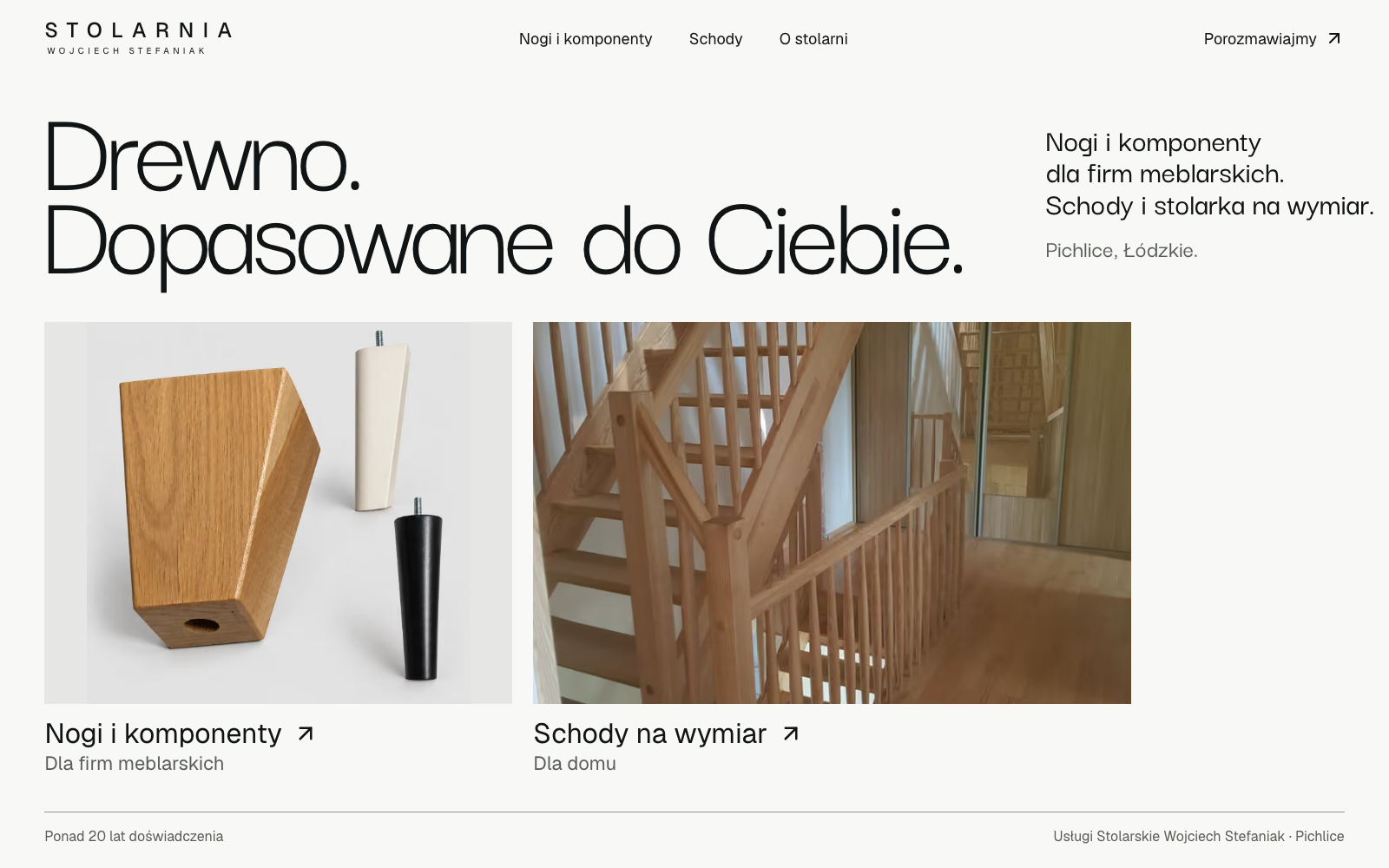
The complete opening view of the live Polish site, captured in October 2026.
Two audiences, one page
Furniture companies look for wooden legs and components. Private customers want to see completed stairs and work suited to their home. I gave each a distinct section, linked directly from the opening view and navigation.
Large type, a light background, and generous spacing keep the page readable. Product and project photographs carry most of the story, supported by short descriptions. The one-page structure keeps the offer and contact section together; it also leaves less room for extensive descriptions of individual services.
From a model to an enquiry
The furniture-leg catalogue shows example models. Opening one brings up a larger photograph and description, with controls to browse the other models. The enquiry link fills the contact form's subject with the selected model's name. Dimensions and finish are then discussed with the workshop.
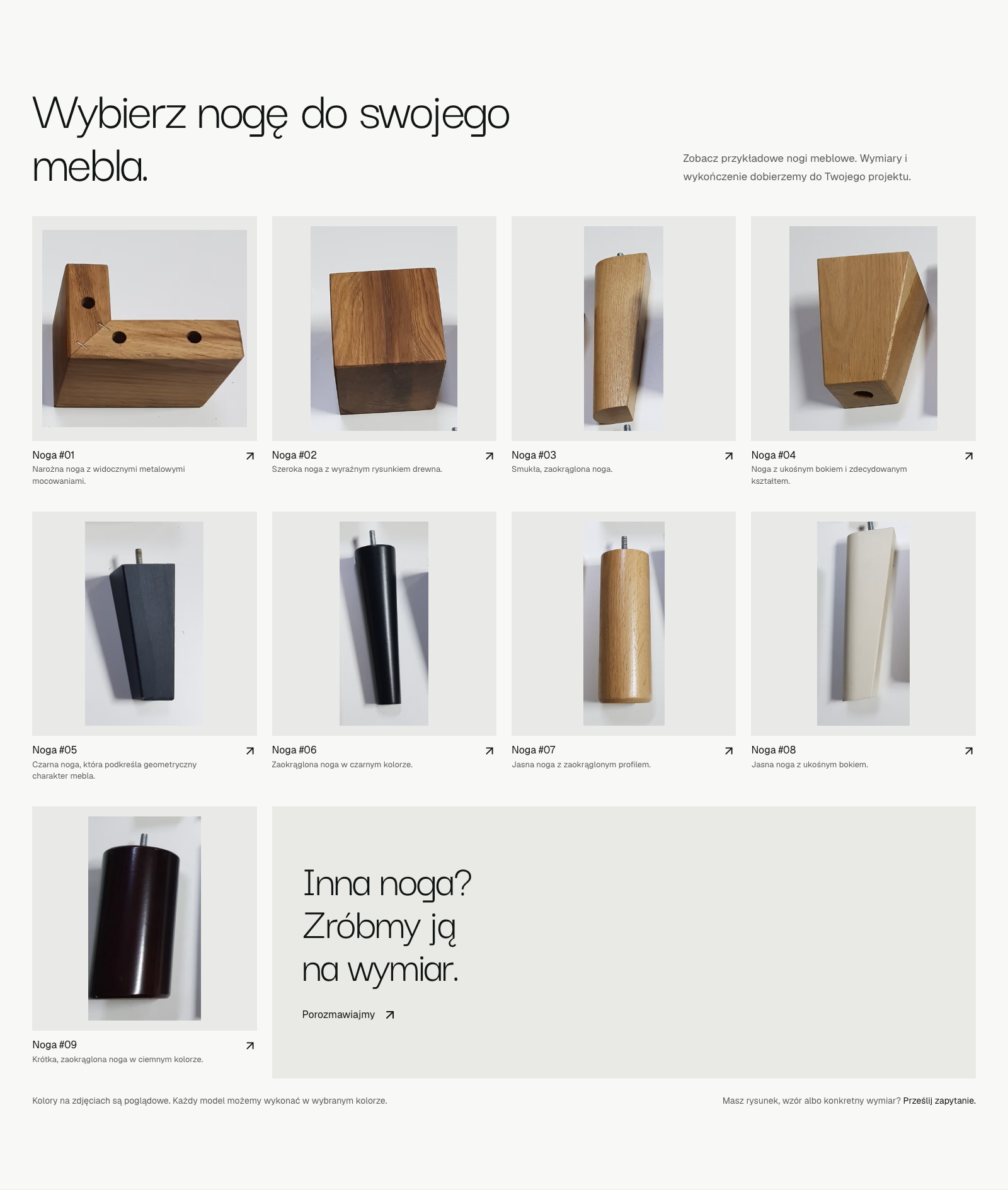
The entire catalogue section, including every model and the option to discuss a custom design.
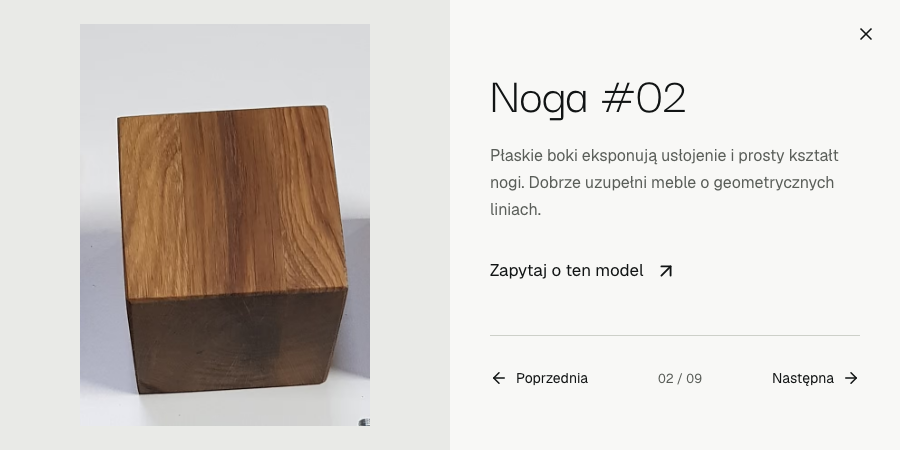
The full model detail dialog. Visitors can browse adjacent models or start an enquiry about this one.
Let the work speak
The staircase section shows completed work at a larger scale, followed by a gallery with photographs that visitors can enlarge. This gives someone considering custom stairs a way to inspect examples before getting in touch.
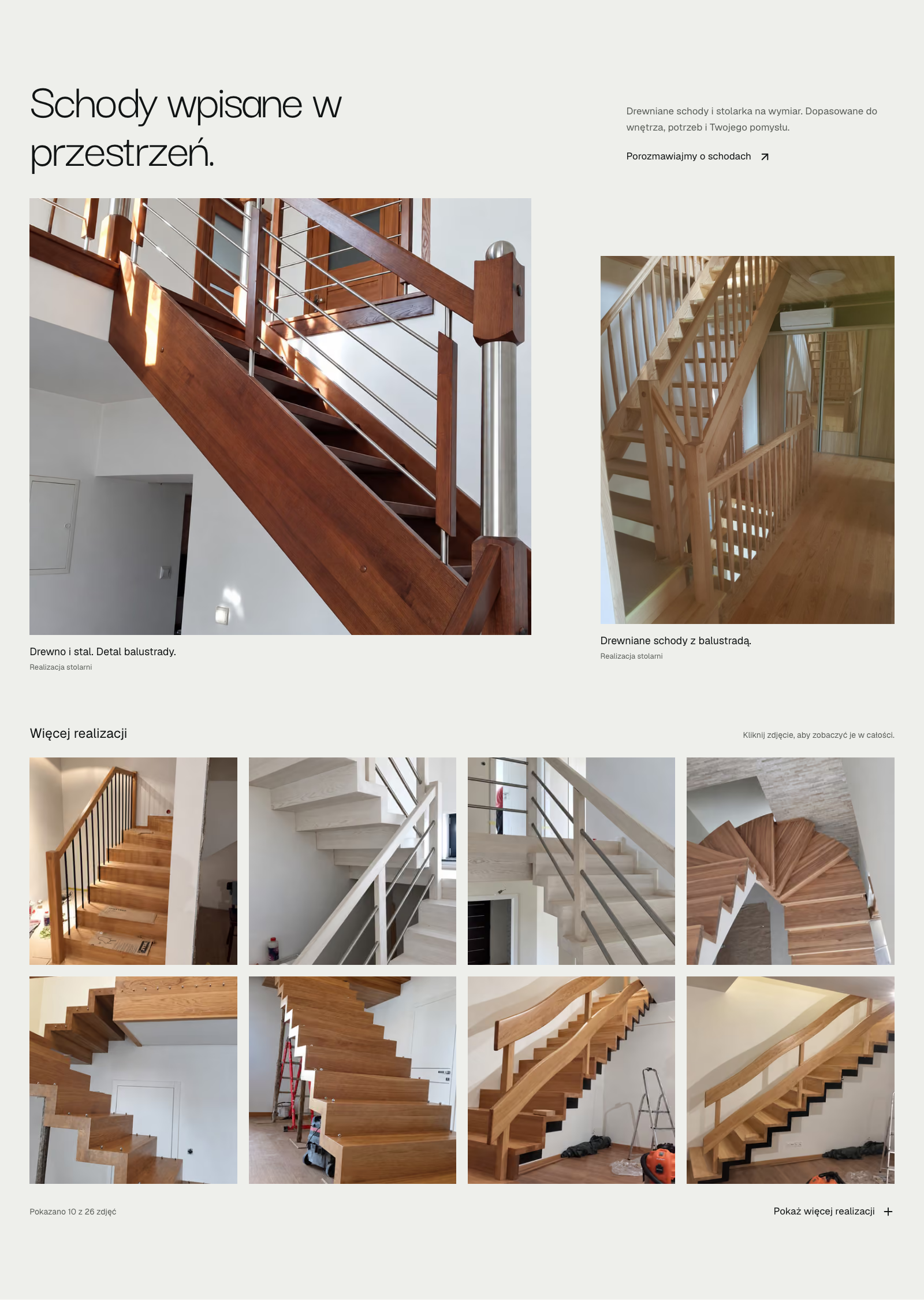
The full staircase section in its initial state, with two featured projects and the first eight gallery photographs.
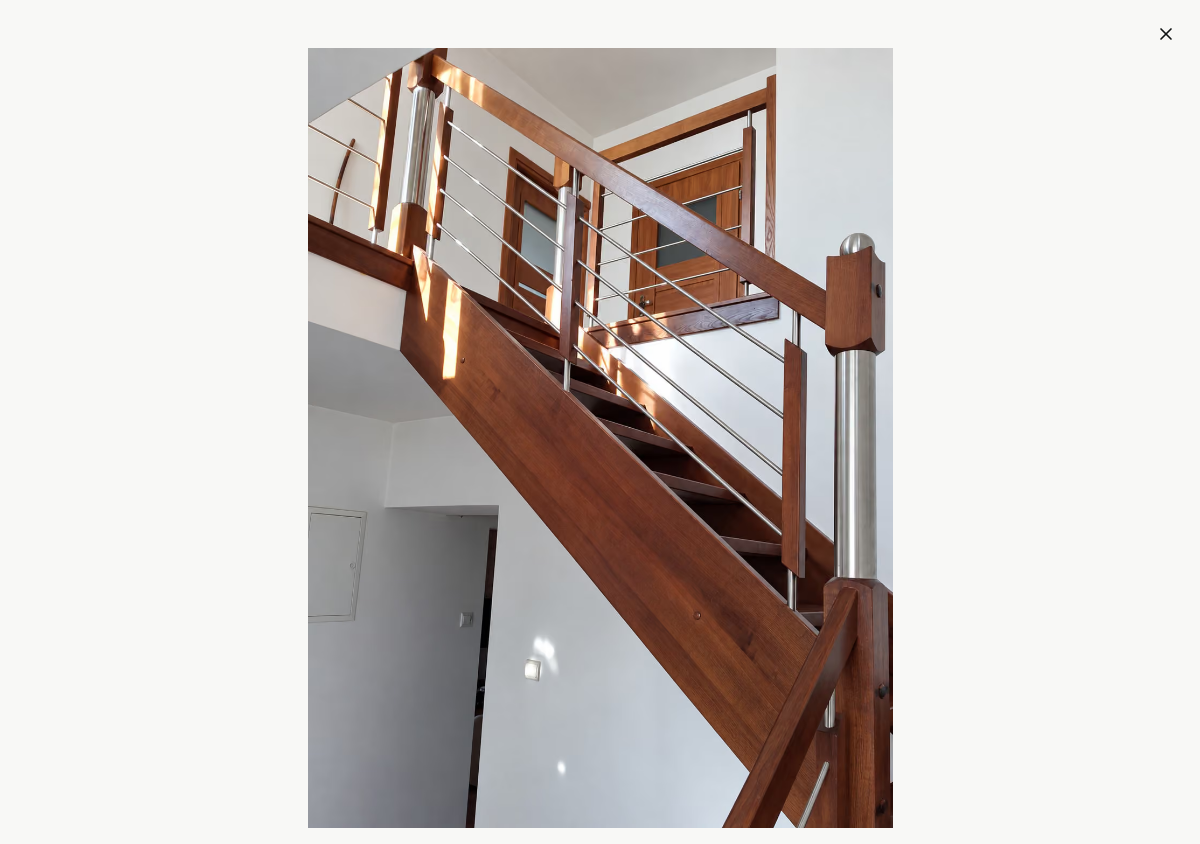
An opened gallery photograph. The lightbox displays the complete image without the thumbnail crop.
Explain the next step
The process section describes how an order starts: a conversation, agreement on dimensions and finish, then production. It gives visitors an outline of the collaboration before they reach the contact form.
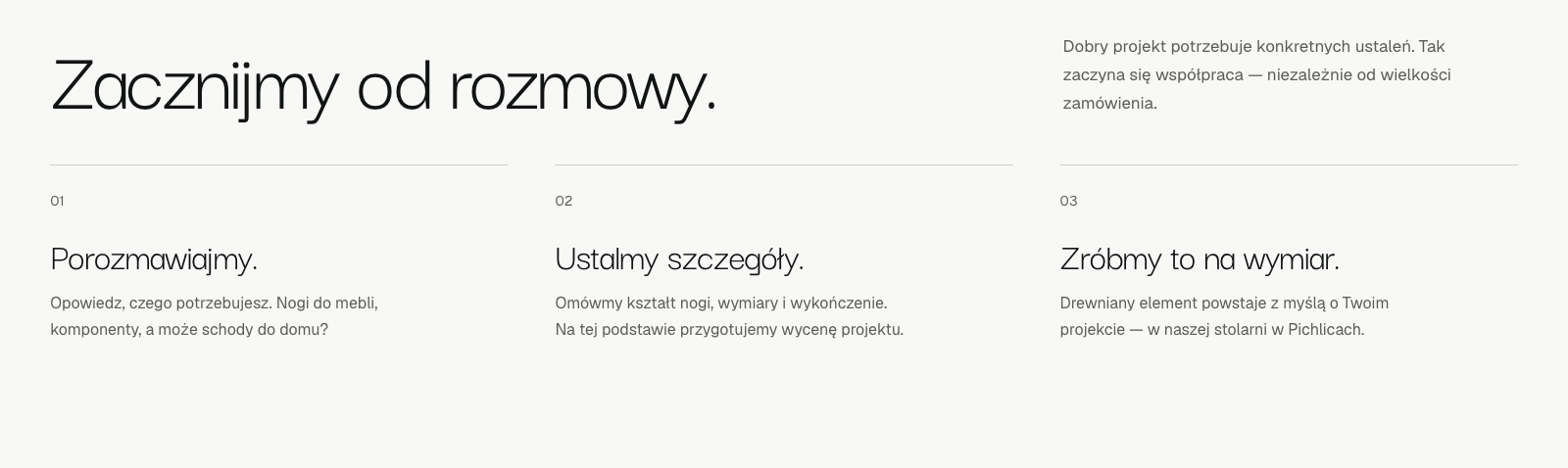
The full process section explains what happens after a visitor gets in touch.
Implementation and result
I implemented the site with Next.js, React, TypeScript, and Tailwind CSS. Models and gallery entries live in local data files. Next.js handles image delivery, while interactive dialogs provide product browsing and enlarged photographs.
The result is a live workshop website with an offer, examples, and a route to contact. It is a small project with a clear purpose, and I kept the scope suited to that purpose.
The complete page

The complete live page at 1600 × 8110 px, including the empty contact form. Open the image to inspect it at its original resolution.